Deaf or hearing impaired

Real-time captions to be delivered in NSW public schools

Progress has been made towards equitable education in New South Wales public schools with captioning provider Ai-Media winning a competitive tender to provide live captions in classrooms across the state.

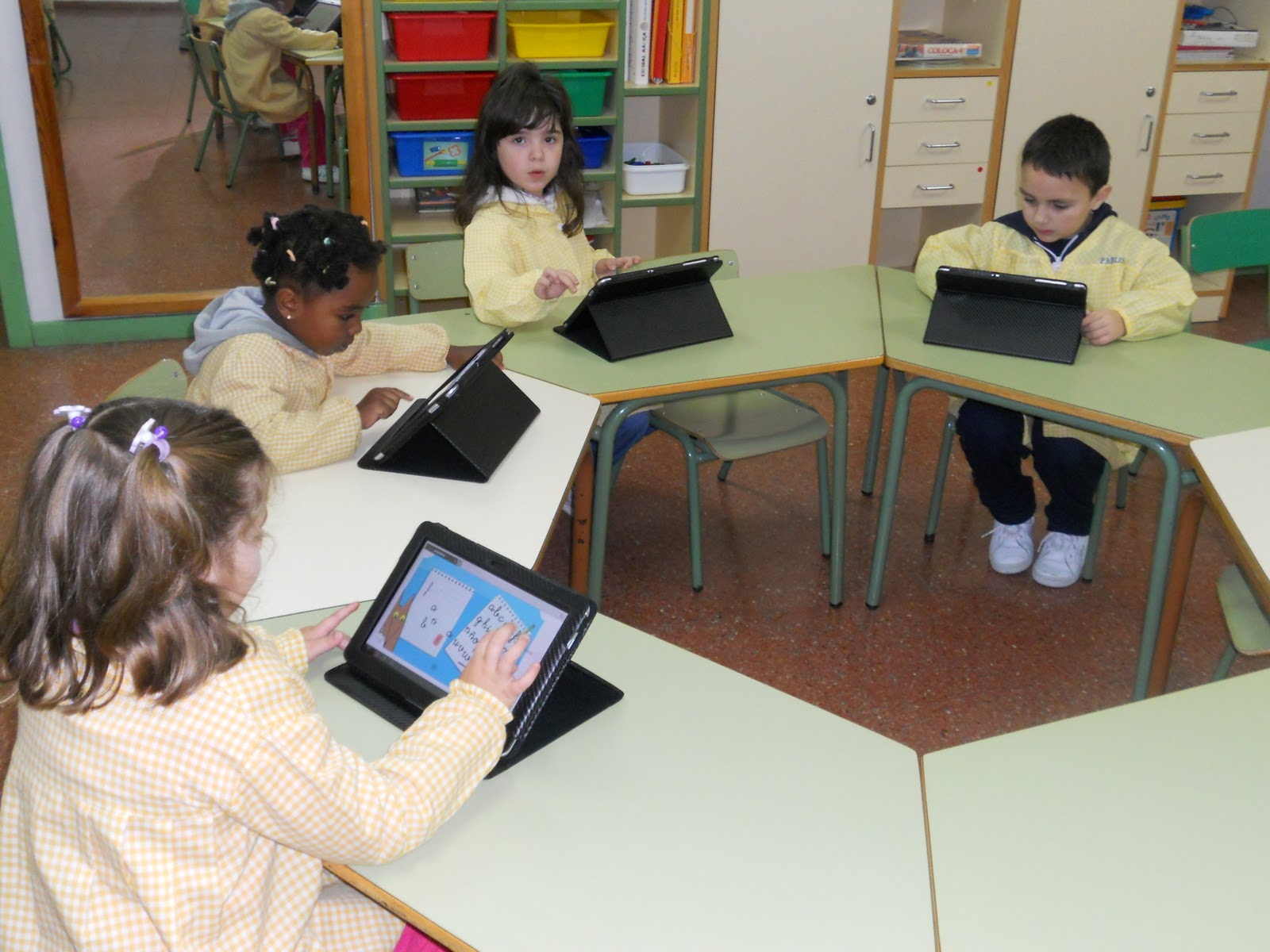
Live or real-time captions are provided at schools, universities, conferences and workplaces. The Ai-Live system uses a trained captioner working remotely, transcribing live speech into captions which appear discreetly on the student’s laptop. This gives Deaf and hearing impaired students direct access to teacher instruction via text.

If the school chooses, a transcript of the lesson can also be provided. This is important as unlike students with hearing, those who are Deaf or have hearing impairment cannot lipread, read captions and take notes at the same time.


Top of page

Accessibility improvements announced at Apple WWDC

A number of new features announced at the Apple Worldwide Developers Conference (WWDC) held in San Francisco last week reveals some potential improvements to the accessibility of Apple devices. Presenting to developers, Apple unveiled its new operating system (OS), called OS X Mavericks, and the latest version of its mobile OS, called iOS 7.

Mavericks will come installed on Apple’s desktop computers and laptops including the iMac, Macbook Pro and Macbook Air, while iOS 7 will come installed on Apple devices such as the iPhone and iPad.


Top of page

ABC found in breach of captioning rules

The Australian Communications and Media Authority (ACMA) has found the ABC in breach of captioning rules due to poor captions on episodes of At the Movies (broadcast on 22 August 2012) and Gruen Planet (broadcast on 17 October 2012).

In its media release, the ACMA states that the ABC did not provide the service required “as the live captions that were broadcast were not adequately synchronised with pictures on the screen. There were also problems with inaccurate and missing captions.” Another issue identified in the investigation reports was that colouring of the captions, which is used to indicate different speakers, was inconsistent.


Top of page

ACMA releases new Television Captioning Quality Standard

The Australian Communications and Media Authority (ACMA) today released its long awaited Television Captioning Quality Standard, which for the first time imposes obligations on broadcasters to ensure that the captions on their programs are readable, comprehensible and accurate.

The ACMA was given the power to draft the new standard as part of amendments to the Broadcasting Services Act which were passed last year. A series of meetings were held in which ACMA consulted with community representative groups, broadcasters and caption suppliers while formulating the standard.


Top of page

Mobile technology and disability at the M-enabling conference

The Australian Communications Consumer Network (ACCAN) has announced the major speakers at the M-enabling Australasia Conference. The event will bring together consumers, government and industry, and focus on how mobile devices, operating systems and apps can be made more accessible for people with disability.

The program, the first of its kind in the southern hemisphere, is designed to cater to the interests of people with a disability, policy makers, device manufacturers and software developers.


Top of page

Computer literacy boosted in South African schools

Phone manufacturer Huawei has partnered with the Khulisani Foundation to launch a training program in South Africa to increase computer skills amongst disadvantaged children with disability.

The mobile Information and Communications Technology (ICT) Training Centre will travel between special needs schools in disadvantaged areas. The centre will focus on the basics of using a computer, including Microsoft Office, and the web. The training is designed to help children with disability from underprivileged backgrounds escape poverty and gain employment later in life.

The project is in keeping with the South African Government’s plan to help people with disability integrate into mainstream society.


Top of page

UK regulator seeks to improve live TV captioning

The UK communications regulator Ofcom has announced proposals aimed at improving the quality of live captioning on television, including asking broadcasters to report on the quality of their captions.

Ofcom notes that the quality of pre-prepared captions (which are called ‘subtitles’ in the UK) is generally very good, and the majority of complaints it receives are related to live captioning. As caption quotas have risen, so have the number of programs being captioned live. Most of this captioning is now undertaken using speech recognition technology, but this is imperfect and errors are common. 

Following consultation with viewers and representative groups, Ofcom has concluded that the four key dimensions that affect the quality of live captions are:


Top of page

Captioned cinema moves forward with new technologies

Two new accessible cinema developments in the USA and UK have movie fans getting excited about what might be the next steps in captioned movies. Both developments, InvisibleCaptions and the Off-Screen Cinema Subtitle System, present the compromise that can win over both consumers and exhibitors.

That compromise is one that allows exhibitors to screen captioned movies across a wide range of sessions where the captions are seemingly ‘open’ to those that are wearing filtering glasses, very similar to 3D glasses. The glasses do not carry projection equipment making them lightweight and less bulky than current captioned cinema eyewear such as Sony’s.


Top of page

Ai-Media appoints new caption quality auditor

The access provider Ai-Media has appointed Robert Scott as an independent auditor to ensure the quality of the captions it produces for broadcast, government, education and corporate services in Australia and the UK.

Scott has had a long career in access. He was formerly CEO of the Australian Caption Centre (the not-for-profit organisation from which Media Access Australia grew), and has a long-standing commitment to captions being of the highest possible quality.


Top of page

Deaf advocate takes discrimination claim to the United Nations

Michael Lockrey, a prominent figure in Australian disability advocacy, has petitioned the United Nations Committee on the Rights of Persons with Disabilities after he and the New South Wales Government failed to reach conciliation over a discrimination complaint.

In February 2012, Lockrey was summoned for jury service in Lismore Court in northern NSW. He wrote to the court and requested live captioning be provided for him during the trial. After much correspondence, Lockrey was informed that captions would not be provided and that he had been excused from jury service because he is Deaf.


Top of page
Syndicate content