
If you work with visuals every day – designing websites, building product pages, creating social media content, or polishing brand assets – you’ve probably noticed a major shift in the last two years. AI image generation tools aren’t just “fun apps” anymore. They’ve become real creative partners that speed up workflows, cut production time, and help you create visuals that previously required a photographer, a designer, a retoucher, and a lot of patience.
The industry is changing fast, and the tools are evolving even faster. And the more I work with them, the more I catch myself thinking: we’re no longer just editing images—we’re shaping ideas in real time.
One of the tools that recently caught my attention is WooPicX, a platform that brings something designers have been asking for since AI went mainstream: editable AI-generated visuals that behave like real studio photos. Not just prompts, not just random outputs, but images you can truly work with.
If you haven’t explored this yet, you’re missing one of the biggest upgrades creative teams can get in 2026.
Why AI Isn’t “Cheating” – It’s Smart Creative Strategy
There’s a common myth that AI replaces creativity. From what I’ve seen, it does the opposite. It removes bottlenecks and lets you focus on the idea itself.
Think about this typical scenario:
- You need a product shot
- It must be in good lighting
- On a clean background
- With a specific color palette
- And you need at least five variations
- Plus matching lifestyle photos
- And everything must follow brand guidelines
Traditionally, this means organizing a photoshoot, editing raw images, sending revisions to the designer, waiting for files, and redoing half of the set if the client changes their mind. AI collapses this timeline from days to minutes.
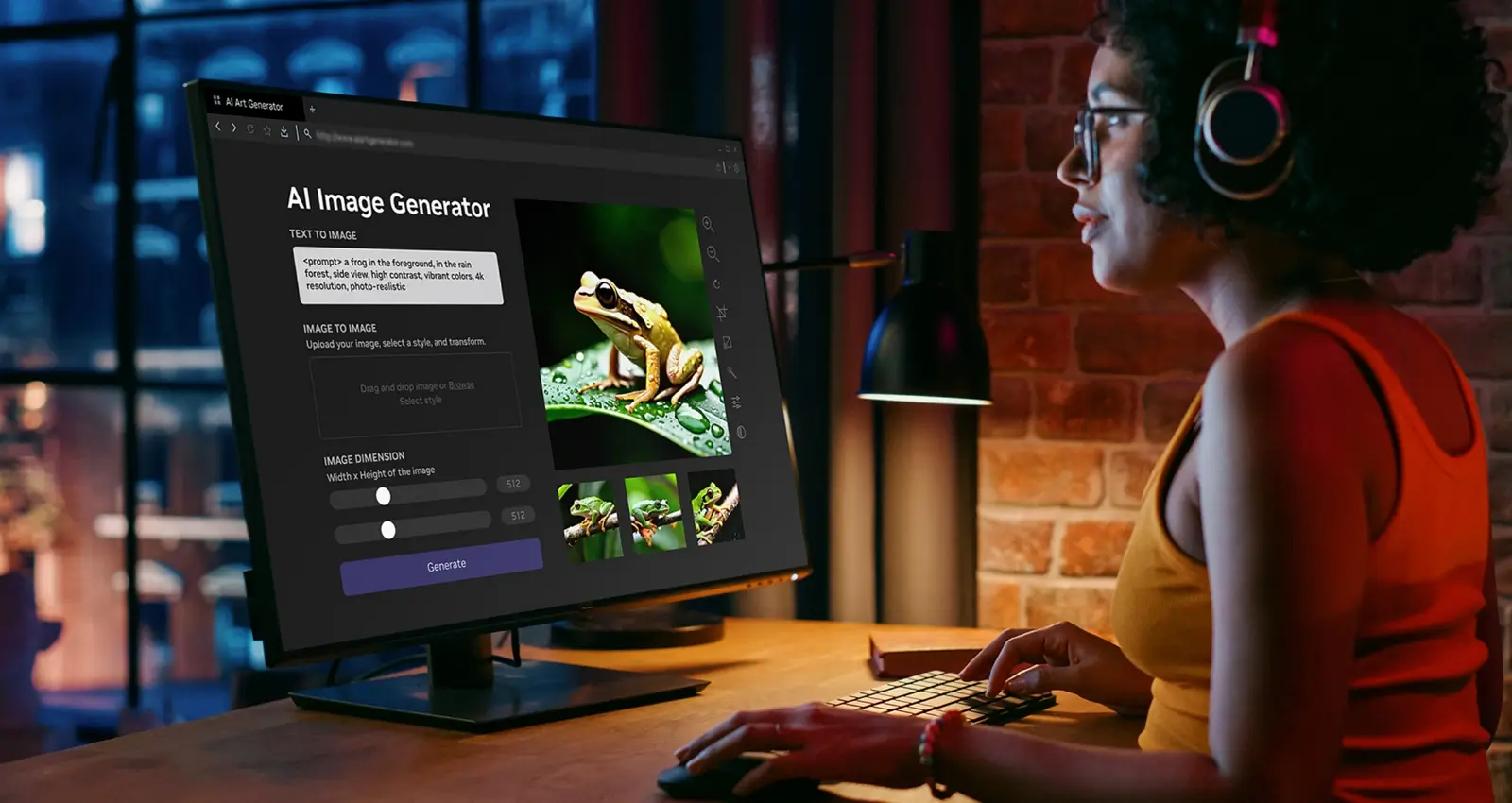
You describe what you need. You refine it. You generate more variations. You test ideas before paying for production. You explore options you wouldn’t normally consider.
And with tools like WooPicX, you don’t just generate images – you edit them with precision that feels almost unfairly efficient.
Where AI Helps the Most (From Real Experience)
After testing dozens of platforms, there are a few areas where AI consistently outperforms traditional workflows—not because it’s “better,” but because it’s simply faster and more flexible.
1. Product Photography That Looks Studio-Ready
AI can now create realistic:
- soft shadows
- reflective surfaces
- correct lens distortions
- depth-of-field
- consistent lighting across image sets
What used to require expensive equipment is now available with one click.
Tools like WooPicX take it even further with editable layers inside the image, so you can tweak colors, adjust background elements, or reposition objects without needing Photoshop mastery.
2. Concept Testing and Creative Exploration
Before AI, testing ideas meant mood boards, stock photos, and a lot of imagination.
Now you can generate:
- 20+ variations of a hero image
- different compositions
- new color schemes
- seasonal versions
- lifestyle angles
This isn’t just convenient – it changes how brands plan campaigns. You don’t guess what might look good. You see it.
3. Faster Content Production for Websites and Social Media
Whether you manage an e-commerce store or a niche review site, you know how exhausting visuals can be.
AI solves this by letting you:
- match your visual style across pages
- create custom graphics in minutes
- generate new banner images instantly
- maintain consistent brand identity
Instead of pulling random stock photos that never quite fit, you can build your own visual library – unique, branded, and perfectly aligned with your tone.
4. Eliminating Stock Photo Limitations
Traditional stock photos come with a problem:
You either have to settle for whatever exists or spend time editing images that don’t fully match your idea.
With AI, you create exactly what you want.
And in platforms that allow AI editable stock images, you get the best of both worlds: the flexibility of stock photos with the creative freedom of AI generation.
The Real Breakthrough: Editable AI Photos
Most AI tools generate a finished image. Good—but not enough for professional use.
What’s actually game-changing is when the output behaves like a layered design file.
This is where WooPicX surprised me. You’re not just getting a static render. You can:
- adjust elements inside the scene;
- recolor products;
- remove or add props;
- switch backgrounds;
- match lighting to your brand;
- maintain the same camera angle across many photos.

This is what photographers have been asking for from day one.
A true hybrid: AI generation + real editing control.
And if your job relies on creating a large number of consistent visuals, this alone can reduce your workload by 60–80%.
How Designers Actually Use AI
Here’s what I see most creative teams doing now:
1. AI for idea generation
Quick sketches, layouts, and visual tests to validate direction.
2. AI for repetitive tasks
Resizing, background cleanup, object removal.
3. AI for full production
Hero banners, product shots, ads, thumbnails, seasonal campaigns.
4. AI for experimentation
Trying lighting styles, props, textures, and environments without committing to expensive shoots.
5. AI as a “visual sandbox”
A place to play with ideas and see what sticks.
The workflow isn’t replacing designers – it’s elevating them.
You still make the decisions. AI simply gives you more room to explore, refine, and create.
Where WooPicX Fits Into All of This
In a market full of AI tools, WooPicX positions itself intelligently:
- high-quality image generation;
- editing tools inside the image;
- commercial-use licensing;
- consistent output styles;
- simple, intuitive UI.
But what really matters is how natural it feels to use.
You don’t spend hours learning the interface. You open the tool, start generating, and within minutes, you already have usable visuals.
For web developers, content creators, and eCommerce owners, this is exactly what we’ve been waiting for.
A tool that speeds up production without lowering quality.
Why This Matters for Creators, Marketers, and Small Businesses
Not everyone has a design team.
Not everyone can afford 10–15 photoshoots per year.
Not everyone wants to build complex Photoshop setups just to launch a new product page.
AI tools level the playing field.
You can now build:
- branded visuals
- consistent product galleries
- lifestyle images
- concept art
- digital ads
- website banners
- social media posts
- thumbnails
- tutorial illustrations
All in one place, with one tool, at a speed that feels almost unreal compared to traditional methods.
This is why AI isn’t a trend – it’s infrastructure.
It’s how visuals will be produced moving forward.
Creativity Without Limits
The part I enjoy the most is the freedom you get. You can follow your idea wherever it takes you. No budget limitations. No scheduling constraints. No waiting for assets.
You think. You try. You adjust. You create.
The entire cycle becomes fluid and intuitive.
And every time AI removes friction from the process, your creativity gets more room to breathe.
Final Thoughts: The Future Is Already Here
AI won’t replace human creativity – it amplifies it.
It gives you more control, more flexibility, and more room to experiment without wasting time or resources.
Platforms like WooPicX represent the next step in this evolution. They’re not just generating images. They’re building a workflow where AI supports your creative thinking instead of taking it over.
If you work with visuals in any capacity – design, content creation, photography, branding, or eCommerce – this is the moment to explore what AI can actually do for you.
Because once you try working with editable AI-generated visuals, it’s hard to go back to the old way.