
I’ve spent enough time reading through spacecraft design proposals and orbital mechanics papers to know that artificial gravity sits in a peculiar zone: it’s not impossible in principle, but the gap between theory and engineering reality is enormous. The question itself gets asked often enough that it deserves a straightforward answer grounded in what we actually know about physics and what we can realistically build.
The core issue is that gravity, as we experience it on Earth’s surface, is fundamentally different from other forces we can generate. It’s not something you can switch on with a power source or create with a material. Gravity emerges from mass itself – it’s a property of spacetime curvature caused by matter and energy. You cannot produce artificial gravity in the way you might produce artificial light or heat. What you can do is create the sensation of gravity through acceleration, and that distinction matters enormously for any practical application.
Rotation as the Only Viable Path
Centrifugal acceleration is the only method that has moved beyond pure theory into actual engineering consideration. When a spacecraft or habitat rotates, objects inside experience an outward push toward the hull. From the perspective of someone standing on the inner surface, this feels indistinguishable from gravity pulling them toward the floor. It’s not true gravity – it’s inertia in a rotating reference frame – but the biological effect is what matters.
I’ve reviewed the mathematics on rotating habitats extensively, and the engineering constraints are real and unforgiving. To generate Earth-like gravity (about 9.8 meters per second squared), you need either a large radius or high rotation speed. A small, rapidly spinning habitat creates problems: the Coriolis effect becomes noticeable and disorienting, objects don’t fall straight down, and the difference in gravitational pull between your head and feet becomes pronounced. A larger, slower-spinning habitat avoids these issues but requires more mass and structural strength. The Nautilus-X concept from NASA, for example, proposed a rotating tether system with a 200-meter radius. That’s substantial infrastructure, and it’s just for the artificial gravity component.
The real limitation isn’t the concept – it’s that rotation only works for habitats or spacecraft with sufficient size. You cannot spin a small capsule or a lunar lander and expect useful results. And once you’re trying to work on a planetary surface or conduct operations in a gravity well, rotation becomes irrelevant. The energy and mass requirements make it impractical for most near-term missions.
Why Mass Manipulation Won’t Work
Every few years, someone proposes using exotic matter, negative energy density, or some manipulation of spacetime to generate localized gravity fields. These ideas rest on legitimate physics – general relativity does permit certain theoretical constructs like wormholes or Alcubierre drives under specific conditions. The problem is that these conditions require matter or energy states that either don’t exist or exist only in quantities far too small to measure, let alone harness.
The Casimir effect, for instance, is real. It’s a measurable quantum phenomenon where virtual particles create a small attractive force between metal plates. But the energy densities involved are minuscule, and there’s no clear path from this laboratory curiosity to generating gravitational effects at any meaningful scale. I’ve seen papers that extrapolate wildly from this foundation, but they’re exercises in mathematical possibility, not engineering roadmaps. The same applies to proposals involving negative mass or exotic matter configurations. They don’t violate known physics, but they require resources or capabilities we have no reason to believe are attainable.
What makes this frustrating is that the theoretical door isn’t completely closed. General relativity doesn’t forbid artificial gravity in principle. But the practical requirements are so far beyond current or foreseeable technology that treating them as near-term solutions is misleading. It’s the difference between “not ruled out by physics” and “achievable with known materials and methods.”
Acceleration Without Rotation
Constant acceleration is another approach that works in principle but faces brutal practical constraints. If a spacecraft could accelerate continuously at 1 g, passengers would experience artificial gravity. The problem is fuel. To maintain 1 g acceleration for any significant duration requires energy and propellant on scales that make current rocket technology look quaint. Even with advanced propulsion concepts like nuclear thermal or ion drives, the mass budget becomes prohibitive. You’d spend most of your spacecraft’s weight on fuel just to maintain the acceleration.
This is why constant-acceleration spacecraft remain theoretical. They’re physically sound but economically and practically unrealistic with foreseeable propulsion technology. For a crewed mission to Mars, you’d want to accelerate for part of the journey, coast in microgravity for most of it, and decelerate at the end. That’s the realistic profile, and it means most of the journey involves no artificial gravity at all.
What Actually Gets Built
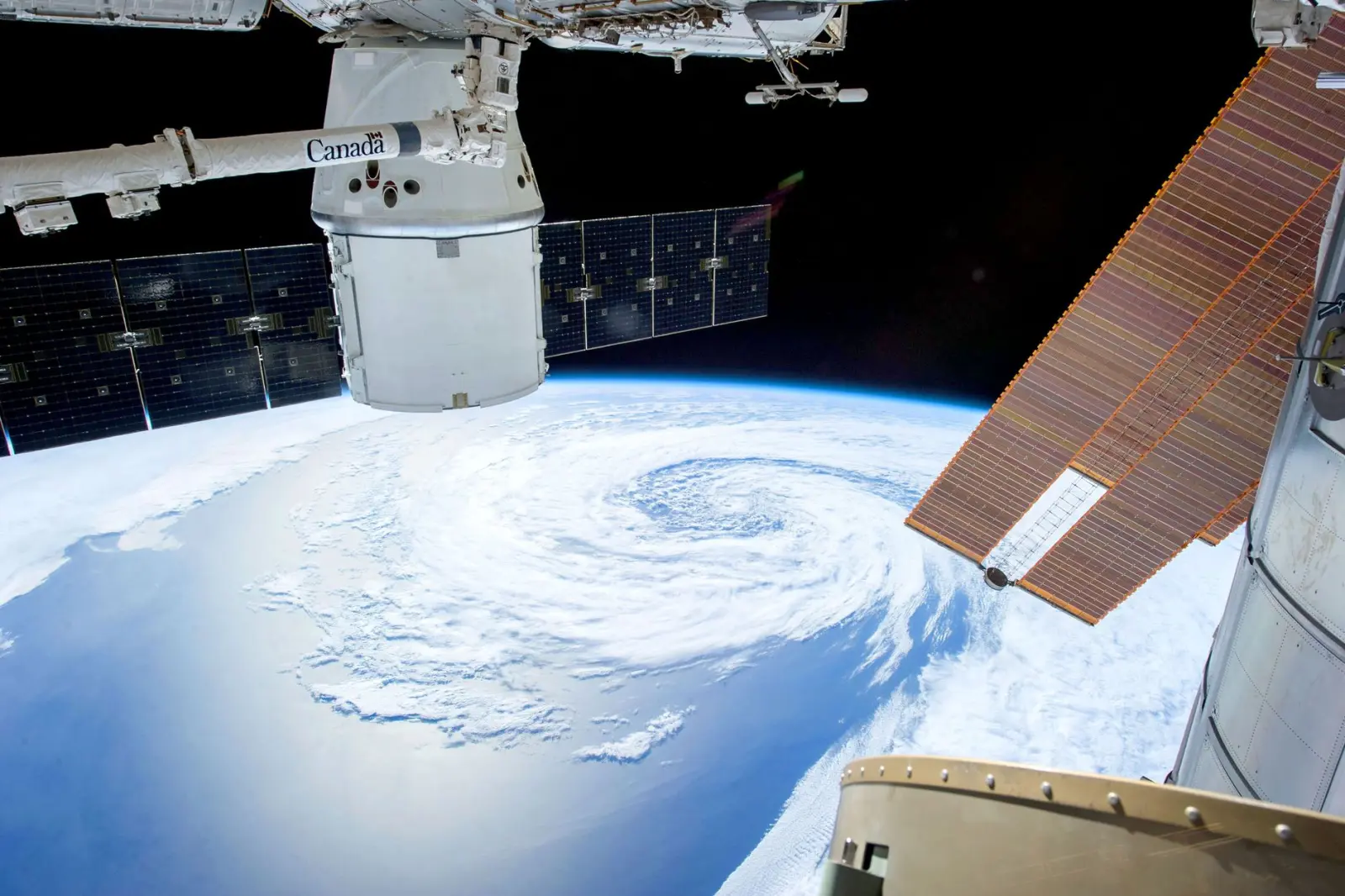
The International Space Station operates in microgravity. Astronauts adapt to it through exercise protocols and pharmaceutical interventions. Future lunar bases will operate in one-sixth Earth gravity. Mars settlements would benefit from about one-third gravity. None of these environments require artificial gravity to be viable, though they do require careful management of human physiology and equipment design.
The closest we’ve come to testing artificial gravity in practice is through short-duration experiments with rotating platforms or tethered spacecraft. The Gemini 11 mission in 1966 actually performed a tethered rotation experiment, generating a small amount of centrifugal acceleration. It worked as predicted. But no one has built a large rotating habitat in orbit, and the engineering challenges of maintaining structural integrity, managing power and thermal systems, and ensuring safety in a rotating environment have kept such projects in the proposal stage.
The reason is straightforward: without artificial gravity, you can still conduct meaningful work, conduct science, and support human life for extended periods. The added complexity and mass of a rotating habitat haven’t justified the benefit for missions we’re actually flying. That calculus might change if we were establishing permanent settlements on the Moon or Mars, but even then, the gravity of those bodies – though low – might be sufficient for long-term human habitation without requiring artificial augmentation.
Artificial gravity remains possible through rotation and theoretically through other means, but the engineering reality is that we build spacecraft and habitats that work in microgravity or low-gravity environments instead. It’s not because artificial gravity is impossible. It’s because the cost and complexity of generating it exceed the benefit for the missions we’re actually planning and executing. That’s the honest assessment after decades of space operations and design studies.