

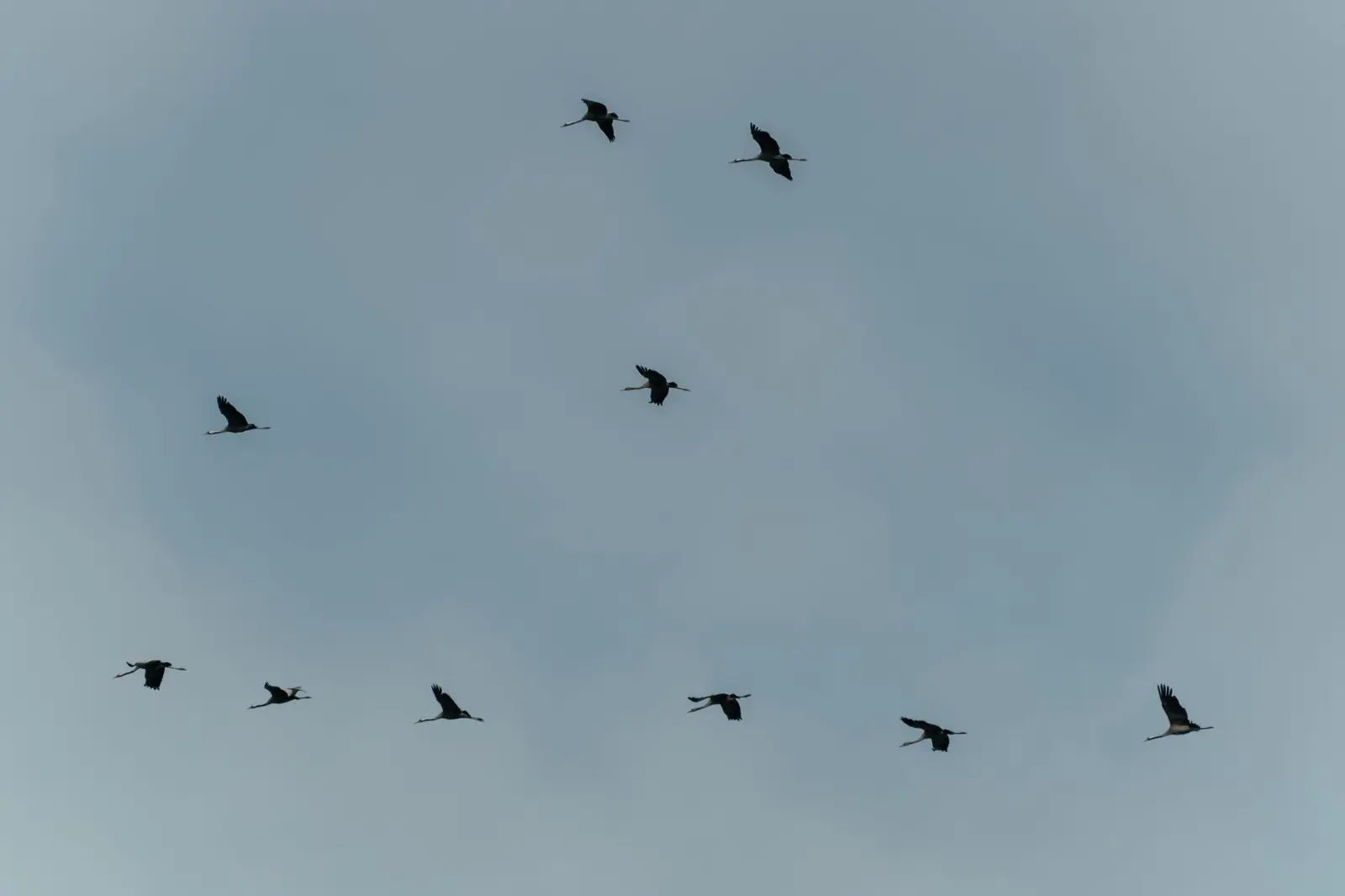
After spending years observing migratory birds and studying their behavior in field conditions, I’ve come to appreciate one of nature’s more elegant solutions to a seemingly impossible problem. Birds don’t sleep the way we do. They can’t afford to. The moment a bird closes both eyes and surrenders fully to unconsciousness, it becomes vulnerable – to predators, to collision, to the simple physics of falling from the sky. Yet birds need sleep just as much as any other animal. Their brains require rest to consolidate memory, regulate temperature, and maintain cognitive function. The answer they’ve evolved is remarkable in its efficiency: unihemispheric slow-wave sleep, or USWS, a state where one half of the brain sleeps while the other stays alert.
What I’ve observed in the field and what research confirms is that this isn’t a partial or weakened form of sleep. It’s a genuine neurological state where one hemisphere experiences the same slow-wave activity we see in sleeping mammals, while the other hemisphere remains in a vigilant, waking-like condition. The sleeping hemisphere gets real rest. The awake hemisphere maintains sensory input and motor control. A flying bird can literally rest half its brain while keeping the other half on watch, all without dropping altitude or losing situational awareness.
The Mechanics of Split Sleep
The actual mechanism is more sophisticated than simply “turning off” one side of the brain. During unihemispheric sleep, the eye on the side of the sleeping hemisphere closes, while the opposite eye stays open. This open eye connects to the awake hemisphere, which continues processing visual information. A sleeping mallard or a migrating warbler can monitor its surroundings through one eye while the other side of its brain genuinely rests. The bird’s flight muscles remain engaged through the awake hemisphere’s motor pathways. Balance and spatial awareness don’t falter because the neural systems controlling flight are distributed across both hemispheres, with the alert side maintaining enough control to keep the bird airborne.
I’ve watched this behavior in captive birds during migration season, and the pattern is consistent. A bird will fly for a period with both eyes open and both hemispheres active. Then, gradually, one eye closes. The bird’s flight doesn’t change noticeably. Its heading remains steady. It continues to respond to obstacles and threats, though sometimes with a slight delay or reduced responsiveness on one side. After a few minutes or sometimes longer, the eye opens again, the hemispheres switch roles, and the previously alert side gets its turn to rest. The cycle repeats throughout the night and during long flights.
The neural switching itself is controlled by structures deep in the brain, particularly the thalamus and brainstem regions that regulate sleep cycles. These areas appear to have evolved specific mechanisms for managing which hemisphere enters sleep at any given moment. It’s not random or involuntary in the way human sleep onset is. Birds seem to have some degree of control over when and how long each side rests, adjusting based on their immediate environment and threat level. A bird in a dangerous location or surrounded by predators will spend less time in deep sleep and more time in lighter, more easily interrupted states.
When and Why Birds Use This Strategy
Not all birds use unihemispheric sleep equally. Dabbling ducks, which sleep in exposed water where predation risk is high, show this behavior extensively. I’ve observed them on open lakes at night, and the birds on the periphery of the group sleep far more with one hemisphere than birds in the center of the flock. The birds on the edges, more exposed to danger, keep one eye open almost constantly. This isn’t learned behavior – it’s an immediate, context-dependent response. The brain allocates sleep resources based on perceived threat.
Songbirds during migration show similar patterns, though their circumstances differ. A bird flying over open ocean or through unfamiliar territory at night faces different challenges than a duck on a lake. The migrating bird must maintain flight stability, navigate using celestial cues or magnetic fields, and avoid collisions with other birds or structures. One hemisphere resting while the other handles these tasks is a practical solution. The bird gets the sleep it needs without the vulnerability of full unconsciousness.
Small birds, which have higher metabolic rates and shorter sleep cycles than larger birds, often show more frequent switching between hemispheres. A sparrow or warbler might cycle through unihemispheric sleep multiple times per hour. Larger birds like geese or swans show longer periods of bilateral sleep when conditions allow, but revert to one-sided sleep when necessary. This flexibility suggests that the neural machinery for USWS is available across many bird species, but the degree to which it’s deployed depends on ecological pressures and immediate circumstances.
The Cost and the Benefit
There are tradeoffs to this system. Unihemispheric sleep appears to be less restorative than bilateral sleep. A bird getting only one-sided sleep over an extended period will eventually need full bilateral sleep to fully recover. This is why birds will seek safe roosting sites whenever possible – not just to rest, but to achieve the deeper, more complete sleep that requires both hemispheres to be offline simultaneously. A bird that has been flying for days and sleeping only in half-brain increments will be visibly more fatigued and less responsive than one that has had access to proper roosting sleep.
Yet the benefit is obvious and immediate. A bird that can rest while flying survives situations where full sleep would be fatal. A migrating warbler that can doze for minutes at a time while crossing the Gulf of Mexico accumulates enough rest to complete its journey. A duck sleeping on open water avoids being caught entirely off-guard by a fox or eagle. The system isn’t perfect, but it works reliably enough that it’s been retained through millions of years of evolution.
What I find most striking about this adaptation is how precisely calibrated it is to the bird’s actual environment and threat level. It’s not a fixed, automatic response. The brain continuously assesses danger and allocates sleep accordingly. A bird in a safe location will sleep normally. The same bird in a risky situation will switch to unihemispheric sleep within seconds. This responsiveness suggests that the neural systems controlling USWS are constantly active, constantly monitoring, constantly making decisions about how much rest the bird can afford at any given moment. It’s an elegant solution to an impossible problem, and it works because the bird’s brain never truly lets its guard down.