

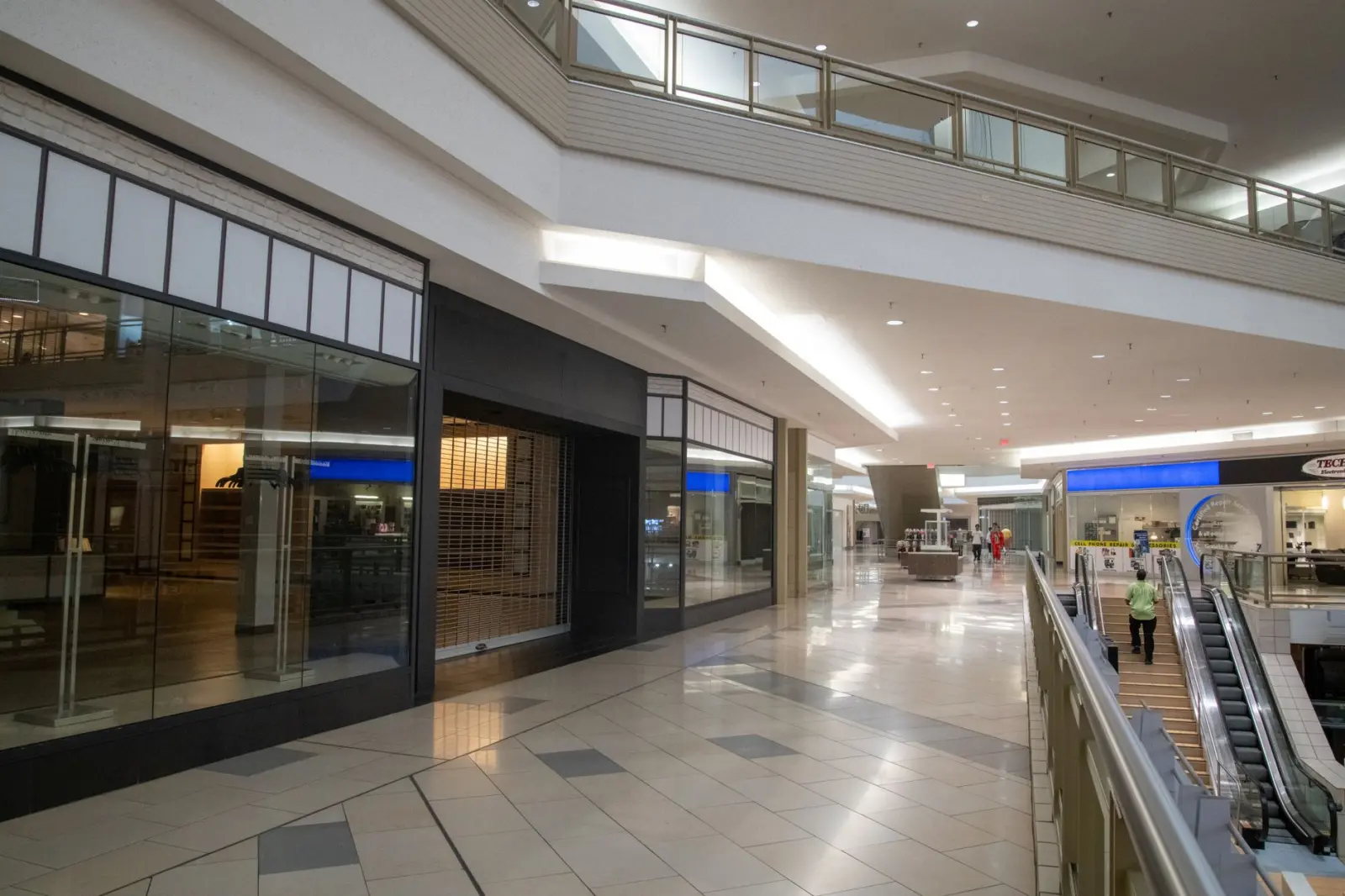
Over the past five years, I’ve watched the retail landscape shift in ways that surprise people who only look at headline numbers. When a major chain announces store closures, the immediate assumption is that e-commerce killed it. That’s rarely the full picture. The real story involves a collision of forces: changing foot traffic patterns, labor cost pressures, inventory management complexity, and real estate economics that have fundamentally altered which physical locations make financial sense.
The stores closing now aren’t random. They tend to cluster in specific patterns. A chain might keep flagship locations in major urban centers while abandoning secondary malls in mid-sized cities. They’ll maintain distribution hubs in logistics-friendly areas while cutting redundant locations that once served a purpose but no longer do. This isn’t panic. It’s recalibration.
The Real Estate Problem Nobody Talks About Enough
Most retail leases run 10 to 20 years. When a chain signed that lease in 2010 or 2012, the economics looked solid. Foot traffic was predictable. Rent was justified by the volume moving through the store. But foot traffic patterns have changed materially. Shopping centers that thrived on weekend browsing now see traffic concentrated on specific days or shifted entirely to different locations. A store that once justified its rent on volume alone now struggles to cover occupancy costs.
The problem compounds when you’re locked into a lease with escalating rent clauses. A retailer might be paying 15 percent more in year five than year one, exactly when traffic is declining. Breaking the lease early costs money, but staying in a location that no longer generates sufficient margin is worse. Some chains have decided it’s cheaper to eat the lease termination penalty and redeploy capital elsewhere.
Real estate values themselves have shifted. Prime retail locations still command high rents, but secondary and tertiary locations have become genuinely difficult to justify. A shopping center that depends on anchor tenants like department stores has become structurally weaker as those anchors themselves close. When the anchor goes, the entire center loses traffic, and smaller retailers suffer disproportionately.
Labor Costs and Operational Density
Staffing a retail location has become significantly more expensive. Minimum wage increases, healthcare obligations, and scheduling complexity have all risen. A store needs a certain sales volume per square foot to justify its labor costs. If that threshold drops below what the location can generate, the math breaks down quickly.
Retailers have also become more sophisticated about labor scheduling and inventory management. They’ve learned that a smaller number of highly productive locations, supported by efficient distribution and fulfillment networks, can serve more customers with fewer total employees than a sprawling network of moderately performing stores. A chain might close 50 stores and actually improve service by consolidating those customers into 10 well-positioned locations with better inventory depth and faster fulfillment capability.
Inventory Complexity and Supply Chain Realities
Physical stores require inventory. More stores means more inventory scattered across more locations. Modern supply chains have made centralized inventory with rapid local delivery more efficient than distributed inventory sitting in dozens of store locations. A customer waiting three days for a delivery from a distribution center often beats a customer driving to a store that doesn’t have the item in stock anyway.
This shift has accelerated since 2020. Retailers discovered that they could serve customers faster and more reliably by holding inventory in fewer, larger facilities and shipping directly to homes or to small local pickup points. The cost of maintaining a full-service retail location with a complete inventory no longer makes sense for many retailers when they can achieve better inventory turns and faster fulfillment through alternative channels.
Customer Behavior Isn’t Uniform
Different customer segments shop differently. Younger customers are more likely to research online and either buy online or visit a store only for specific items. Older customers still value the in-store experience but are concentrated in certain geographic areas. A chain closing stores in one region while opening or maintaining them in another isn’t necessarily in trouble. It’s following where its actual customers are.
Some categories have been hit harder than others. Apparel and home goods, which customers increasingly feel comfortable buying online, have seen more aggressive store closures. Grocery and pharmacy have held up better because they serve immediate, local needs. Specialty retailers that offer expertise or experience have maintained stronger store networks because the physical location provides genuine value that online can’t replicate.
What’s often overlooked is that store closures sometimes reflect success, not failure. A retailer that built a large store network 15 years ago might have overestimated how many locations it needed. Closing the weakest 20 percent of stores while improving the remaining 80 percent can actually strengthen profitability. The closure isn’t a sign of decline. It’s a sign of optimization.
Market Consolidation and Format Shifts
Larger retailers with scale are consolidating market share by closing smaller competitors’ stores through acquisition, then rationalizing the combined network. This looks like store closures but is actually market consolidation. The customer base gets absorbed into larger, more efficient locations.
Format shifts matter too. A traditional department store location might close, but the retailer might open a smaller, more efficient format store a few miles away. The store count goes down, but the actual retail presence in the market remains or even strengthens. These nuances get lost in headline closure numbers.
What I’ve observed repeatedly is that retailers closing stores are usually trying to improve unit economics, not abandon their markets. The stores that remain tend to be more profitable, better positioned, and more strategically valuable. The ones closing were often carrying too much cost for the revenue they generated. That’s not a market failure. That’s a correction that was overdue.