

After years of working with animal behavior and physiology, I’ve noticed that the question of water consumption often comes loaded with assumptions. Most people assume all animals need to drink regularly the way humans do. In reality, many animals have evolved to extract water from their environment in ways that bypass the need for drinking altogether. Some never take a sip in their entire lives.
The key insight is that water exists in multiple forms in nature. It’s not just standing pools or flowing streams. Water is locked inside plant tissues, embedded in seeds, present in the bodies of prey animals, and even generated through metabolic processes inside an organism’s own cells. Animals that have adapted to water-scarce environments have simply learned to harvest it from these sources instead of seeking it in liquid form.
Metabolic Water: The Internal Supply
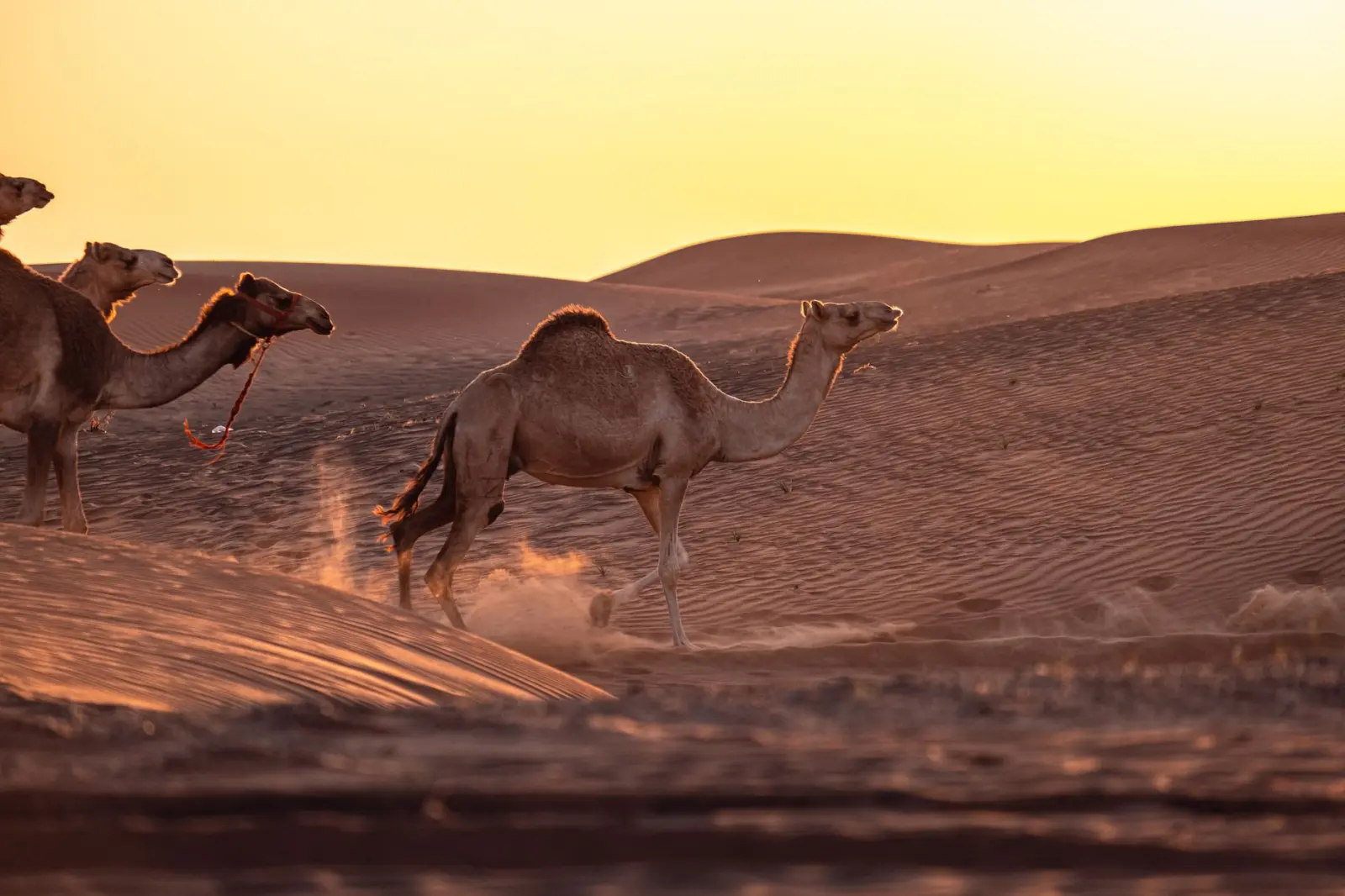
One of the most elegant solutions I’ve observed is metabolic water production. When an animal breaks down fats, carbohydrates, and proteins during digestion, the chemical reactions produce water as a byproduct. A camel, for instance, doesn’t just store fat in its hump as an energy reserve. That fat, when metabolized, yields roughly one gram of water per gram of fat consumed. For an animal living in the Sahara, this is significant. Over weeks of travel without access to drinking water, a camel can sustain itself partly through this internal water generation.
Insects and small rodents rely on this mechanism heavily. A kangaroo rat, common in North American deserts, derives most of its water from the seeds it eats. The metabolic breakdown of those seeds produces enough water to keep the animal functional. I’ve seen studies tracking these animals in captivity where they were given only dry seeds and no water source, and they thrived. Their kidneys are extraordinarily efficient at concentrating urine, and their feces are nearly desiccated, meaning almost no water is wasted through excretion.
Extracting Water from Food
Plants and prey animals are essentially water storage units. A succulent plant like a cactus can be 80 to 90 percent water by weight. When a desert herbivore eats these plants, it’s consuming a significant water payload along with the nutrients. Koalas in Australia subsist almost entirely on eucalyptus leaves, which contain enough moisture to sustain them without drinking. Their digestive system is specialized to extract maximum water from this fibrous material.
Carnivores have an even more direct approach. The muscle tissue of prey contains substantial water content. A lion or a desert fox obtains a considerable portion of its hydration from the bodies of animals it hunts. This is why predators in arid regions can go extended periods without visiting a water source. The prey itself is the water source. I’ve observed that many desert-dwelling carnivores have behavioral patterns that reflect this. They hunt at night or in cooler hours, partly to minimize their own water loss through perspiration and respiration.
Physiological Adaptations for Water Conservation
Beyond obtaining water, the real survival strategy lies in not losing it. This is where anatomy and behavior intersect in ways that are often underestimated.
Kidneys in desert animals are structurally different from those in animals with regular water access. Desert-adapted mammals have longer loops of Henle in their nephrons, the functional units of the kidney. This anatomical feature allows them to concentrate urine to extreme degrees. A human can concentrate urine to roughly 1200 milliosmoles per kilogram. A camel can reach 2800. A kangaroo rat can exceed 5000. This means they excrete the same amount of waste while using a fraction of the water.
Behavioral water conservation is equally important. Many desert animals are nocturnal or crepuscular, active only during cooler parts of the day. This reduces evaporative water loss through respiration and sweating. Some animals, like certain beetles and toads, enter a state of dormancy during the driest periods, essentially shutting down metabolism to near-zero levels. A spadefoot toad can remain buried underground for months, its metabolic rate so low that water loss becomes negligible.
Marine Animals and Saltwater Challenges
Marine mammals and fish face a different but equally demanding problem. They live surrounded by water they cannot drink. Saltwater is lethal to most terrestrial physiology because it contains dissolved salts at concentrations higher than an animal’s blood. Drinking it would cause dehydration at the cellular level.
Sea turtles and seabirds have evolved specialized salt glands that filter excess sodium and chloride from their bloodstream and excrete it as a concentrated brine. I’ve seen this in action with marine iguanas, which spend hours in the ocean feeding on seaweed and algae, then return to land to expel salt through glands near their eyes. Fish, meanwhile, have permeable skin and gills that lose water constantly to the hypertonic environment. They compensate by drinking seawater but then actively excreting the salt through their gills and concentrated urine. Some fish produce urine that is less salty than their blood, a physiological feat that seems counterintuitive until you understand the mechanism.
Whales and dolphins don’t drink seawater at all. They obtain all their water from the tissues of fish and marine mammals they consume. The water content in a fish is sufficient to meet their hydration needs, and their kidneys are efficient enough to handle any incidental salt intake.
Dormancy and Estivation
In prolonged droughts, some animals enter a state called estivation, similar to hibernation but triggered by heat and dryness rather than cold. Lungfish can survive years in a mucus cocoon, their metabolism reduced to almost nothing. Certain frogs can lose up to 70 percent of their body water and still survive. When rain returns, they rehydrate and resume normal activity. This isn’t just a passive survival mechanism. The animal’s physiology actively protects its cells from the damage that dehydration would normally cause.
What strikes me most about these adaptations is how specific they are. An animal doesn’t simply become “good at surviving without water.” Instead, it develops a constellation of traits that work together. Efficient kidneys, behavioral patterns that minimize water loss, the ability to extract water from specific food sources, and sometimes the capacity to enter dormancy. Remove any one of these elements, and the animal’s survival strategy becomes compromised. This is why a camel thrives in the Sahara but would struggle in a temperate forest, and why a kangaroo rat cannot survive in a humid environment despite its desert adaptations. The system is finely tuned to a specific ecological niche.